Date: January 28 2026
Author: FINTECH Circle
As fintech adoption accelerates, so does the sophistication of fraud. Deepfakes, synthetic identities, and AI-powered scams are no longer edge cases they are becoming the norm.
In fact, digital forgeries have increased by more than 200% year-on-year, and deepfake attacks now occur every few minutes globally.
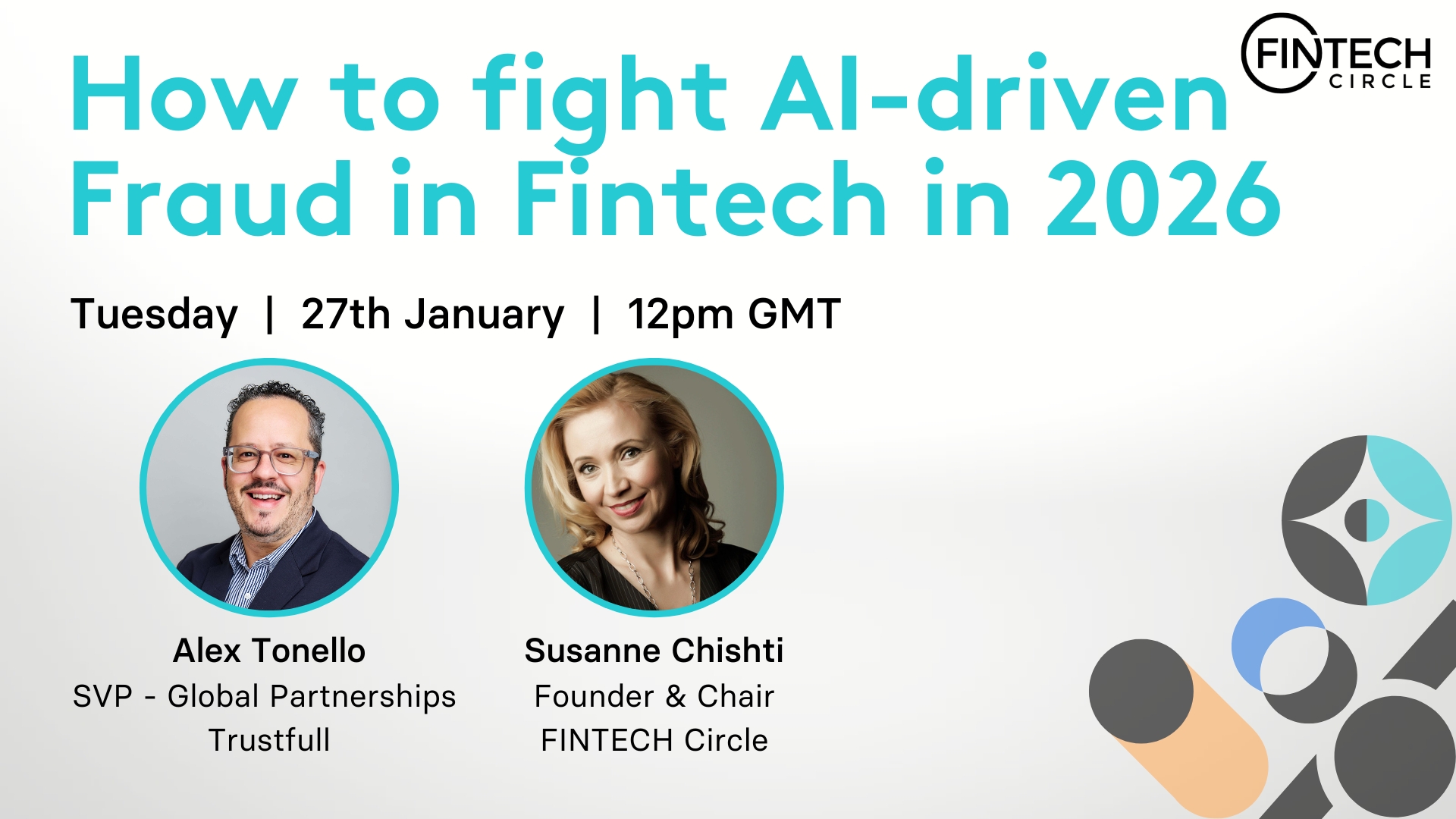
This was the focus of FINTECH Circle’s recent webinar, “How to Fight AI-Driven Fraud in Fintech in 2026”, moderated by our Founder & Chair, Susanne Chishti, with Alex Tonello, SVP Global Partnerships at Trustfull, sharing real-world insights from working with fintechs across the globe.
Here are the key takeaways every fintech leader should know.
- Why AI-Driven Fraud Is Escalating So Fast
- Fraudsters are innovating faster than traditional fraud prevention systems. With widely available AI tools, they can now:
- Generate hundreds of fake identities at scale
- Create highly realistic deepfake videos and voice clones
- Automate phishing, social engineering, and account takeovers
- Bypass legacy KYC and identity verification methods
The result? Over $12.5 billion lost to consumers globally last year, and 1 in 20 traditional ID verification checks failing to detect sophisticated fraud attempts.
As Alex highlighted during the session:
“Nothing can be taken at face value anymore — not a new account, not an ID document, not even a normal-looking login.”
The Limits of Traditional Fraud Prevention
Most fintechs still rely heavily on:
- ID document verification
- Biometric checks
- Manual reviews
- Rule-based systems
While these methods remain important, on their own they are no longer sufficient. AI-generated identities can pass visual checks, and fraudsters increasingly exploit the gaps between systems.
This creates two major problems:
- High fraud losses, and
- Poor customer experience, due to excessive friction for genuine users.
Open Source Intelligence (OSINT): A New Layer of Defence
One of the most powerful approaches discussed in the webinar was the use of Open Source Intelligence (OSINT).
OSINT uses publicly available digital signals to assess whether an identity behaves like a real person over time.
Instead of asking “Does this ID look real?”, OSINT asks:
“Does this digital identity behave like a real human?”
These signals include:
- Email and phone number history
- Presence on messaging apps and web services
- Data breach history (surprisingly a positive trust signal)
- IP reputation and device behaviour
- Social and digital footprint consistency
When combined, these signals create a much richer picture of trust and risk.
Risk Signals vs Trust Signals
A key concept introduced was the difference between risk signals and trust signals.
Examples of Risk Signals:
- Disposable or virtual phone numbers
- Emails with random digits and no digital history
- VPN or masked IP addresses
- No presence on common platforms (WhatsApp, Google, etc.)
Examples of Trust Signals:
- Long phone number history with real operators
- Email accounts with years of activity
- Presence on multiple legitimate platforms
- Consistent digital footprint across channels
Individually, these signals may be weak but together they become highly predictive.
Start at Onboarding But Don’t Stop There
Most fraud can and should be stopped at onboarding, before accounts are even created. However, fraud evolves across the entire customer journey:
- Login attempts
- Transactions
- Profile updates
- Account takeovers
Modern fraud prevention needs to be continuous, using multiple layers of intelligence such as:
- OSINT signals
- Device and session analysis
- Behavioural biometrics
- Bot and automation detection
All running silently in the background, without adding friction for genuine users.
The Business Impact: Why This Matters Financially
Beyond security, there is a clear ROI case.
By layering low-cost OSINT checks before expensive manual reviews and ID verification, fintechs can:
- Reduce fraud losses
- Cut operational costs
- Lower false positives
- Improve conversion rates
- Deliver smoother customer experiences
In practical terms, this means fewer manual reviews, fewer failed signups, and significantly less money lost to fraud.
The Future of Fraud Prevention
The key message from the webinar was clear; There is no silver bullet.
AI-driven fraud will continue to evolve. The only effective response is a multi-layered, adaptive approach, combining:
- Traditional KYC and AML
- OSINT and digital risk intelligence
- Behavioural and device-based signals
- Continuous monitoring across the customer lifecycle
Fintechs that invest in this now will not only protect themselves — they will also gain a competitive advantage through faster onboarding, lower friction, and stronger customer trust.
Watch the Full Webinar On-Demand below